


 by
by The rapid demographic and economic transformation that Tulum has experienced over the past decade has completely redefined the educational needs in the region. While public infrastructure has historically absorbed basic demand, the constant influx of Mexican families and the arrival of a growing community of expatriates, entrepreneurs, and digital nomads have driven a dynamic ecosystem focused on the best schools in tulum.
Today, the municipality’s educational offering is split between traditional institutions with official accreditation and learning communities applying cutting-edge methods. In this comprehensive guide, we will analyze the best academic alternatives in the area, comparing their pedagogical models, language instruction (bilingual and trilingual), registration and tuition costs, as well as the available infrastructure to help you choose the ideal option for your family.
Table of Contents
Educational Landscape in Tulum: Tradition vs. Active Pedagogies
In Tulum’s educational environment, two main approaches coexist, catering to different family profiles and lifestyle goals:
- Bicultural Models with SEP Accreditation: Formally structured institutions that integrate the official curriculum of the Ministry of Public Education (SEP) with constructivist and humanist methodologies. They are characterized by offering bilingual (Spanish and English) and even trilingual instruction (incorporating French), prioritizing academic discipline, technology, and cross-cutting skills development.
- Active and Alternative Pedagogies: Educational centers guided by philosophies such as Montessori, Waldorf, and Reggio Emilia, as well as Project-Based Learning (PBL) and STEM (Science, Technology, Engineering, and Mathematics) frameworks. These options place their focus on environmental sustainability, social-emotional development, student autonomy, and direct contact with nature.
Resident families and professionals settling in residential areas like Aldea Zamá, La Veleta, or Tumben Kaa typically seek alternatives that not only guarantee a solid academic level, but also educational flexibility, multicultural communities, and small class sizes that ensure personalized attention.
Analysis of the Main Private Schools in Tulum
Colegio Inglés Tulum (Downtown / Col. Huracanes)
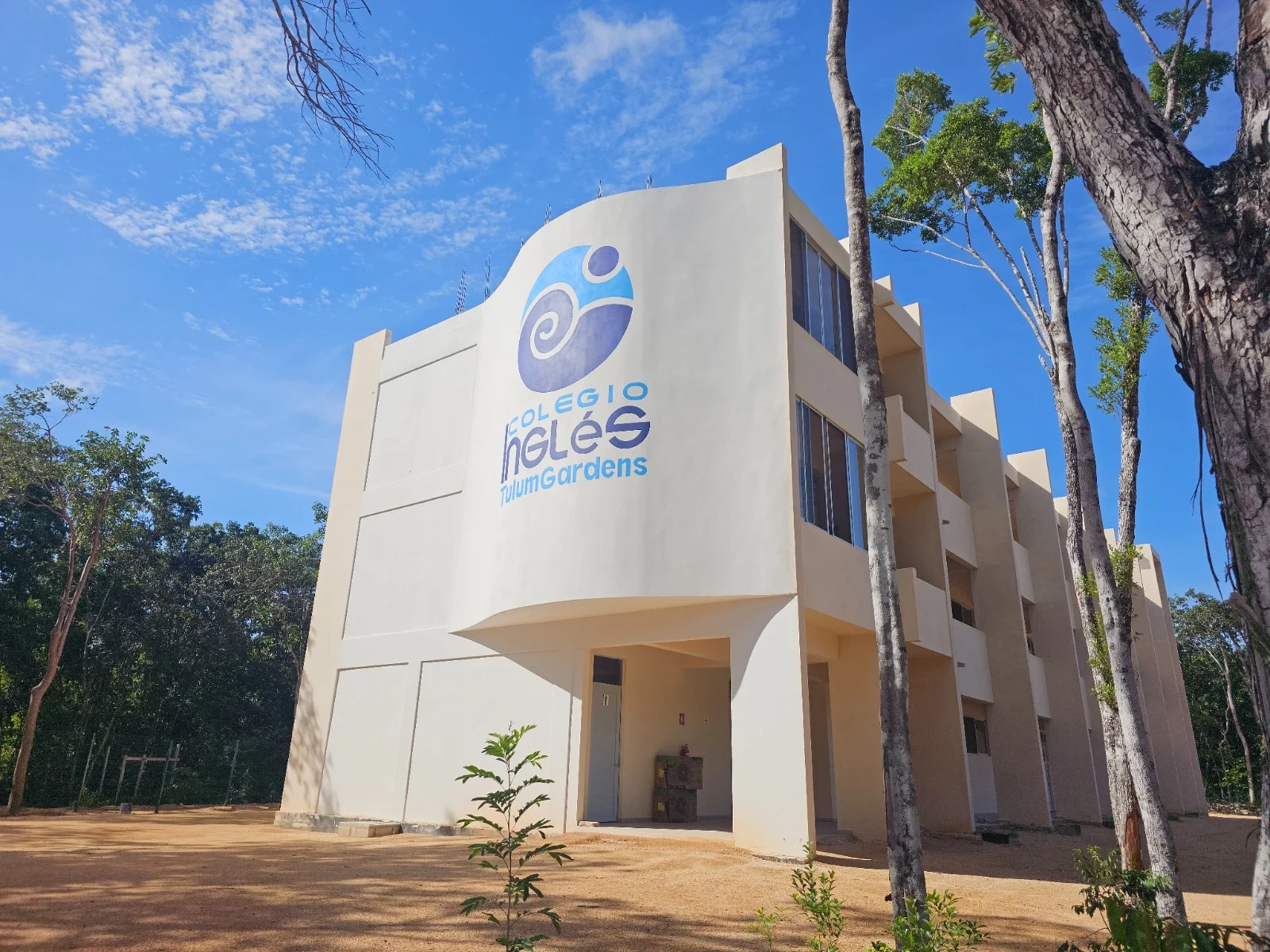
Located on Escorpión Sur Street, between Andrómeda Oriente and Sol Oriente Streets in Colonia Huracanes, Colegio Inglés Tulum boasts over a decade of operation in the region and official SEP accreditation. It offers education from Nursery (starting at 2 years old) and Preschool through Elementary and Middle School. Its eclectic-humanist model combines academic and digital skill development with emotional intelligence, delivering bicultural instruction (60% Spanish and 40% English) and integrating French starting in upper elementary. To ensure personalized guidance, it maintains small class sizes of 18 to 22 students per classroom, with a strict cap of 20 students in selected grades. Facilities include air-conditioned classrooms, science and computer labs, a library, a multipurpose sports court, a cafeteria, a psychopedagogy department, and an in-house medical service.
Annual registration fees range between $8,000 and $12,000 MXN depending on the grade level (approximately $7,500 MXN in preschool, $8,850 MXN in elementary, and $8,920 MXN in middle school). Monthly tuition rates range from $5,000 to $8,000 MXN ($280 to $450 USD), breaking down to $5,000–$6,150 MXN for preschool, $6,000–$6,730 MXN in elementary, and $7,000–$7,450 MXN in middle school. Additional costs include annual supply and material packages between $4,000 and $5,500 MXN, along with an approximate cost of $1,300 MXN for the official school uniform.
Colegio Inter de la Riviera Maya (Col. Maya Pax)
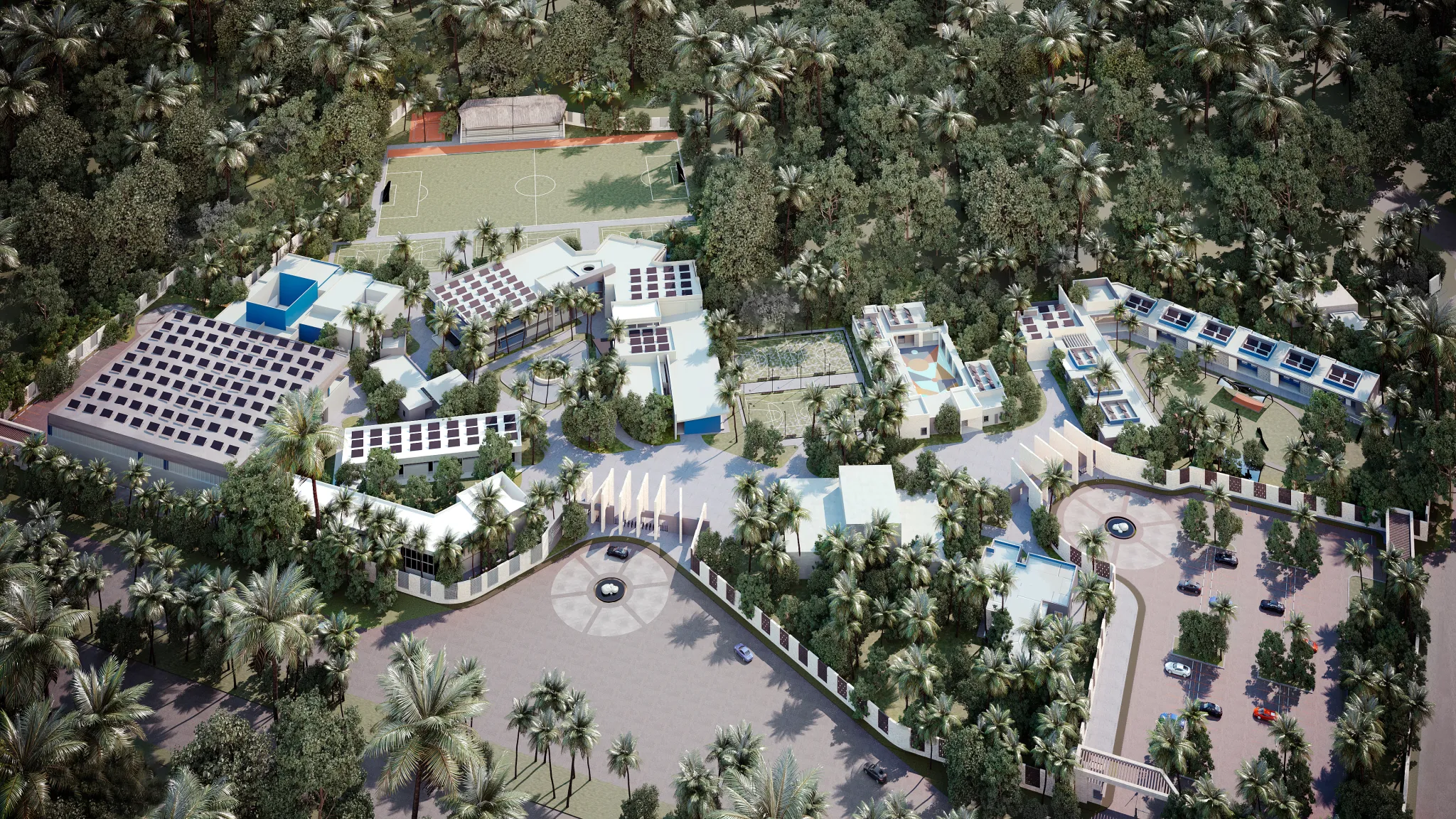
Located on Bubul-Ek Street S/N in Colonia Maya Pax, this institution offers a constructivist bicultural model with SEP accreditation across Nursery, Preschool, Pre-First, Elementary, and Middle School levels. The academic program implements bilingual immersion through the Bicultural English Program (BE) and the CLIL (Content and Language Integrated Learning) approach. At the preschool level, it integrates Bancubi for mathematical reasoning, the Katz & Katz system for cursive handwriting maturity, and Montessori influences. Its transitional Pre-First grade (ages 6 to 7) adopts principles from the Finnish educational system to consolidate routines and emotional intelligence prior to transitioning to the UNOi platform in elementary school. The middle school level focuses on multiple intelligences and collaborative project-based learning. Class size is capped at 18 students per classroom, and infrastructure includes science labs, computer rooms, a library, sports facilities, children’s play areas, and closed-circuit security.
The financial structure follows an 11-monthly-payment plan per year. Annual registration is $5,394 MXN for nursery, preschool, and elementary school, increasing to $5,770 MXN for middle school. Monthly tuition rates are $3,575 MXN for nursery and preschool, $3,700 MXN in elementary, and $4,870 MXN in middle school. Complementary expenses include school textbook packages for $2,400 MXN, uniforms for $1,200 MXN, and annual learning supply fees ranging between $1,750 and $2,750 MXN depending on the grade level.
Korali Comunidad Educativa (Tumben Kaa)
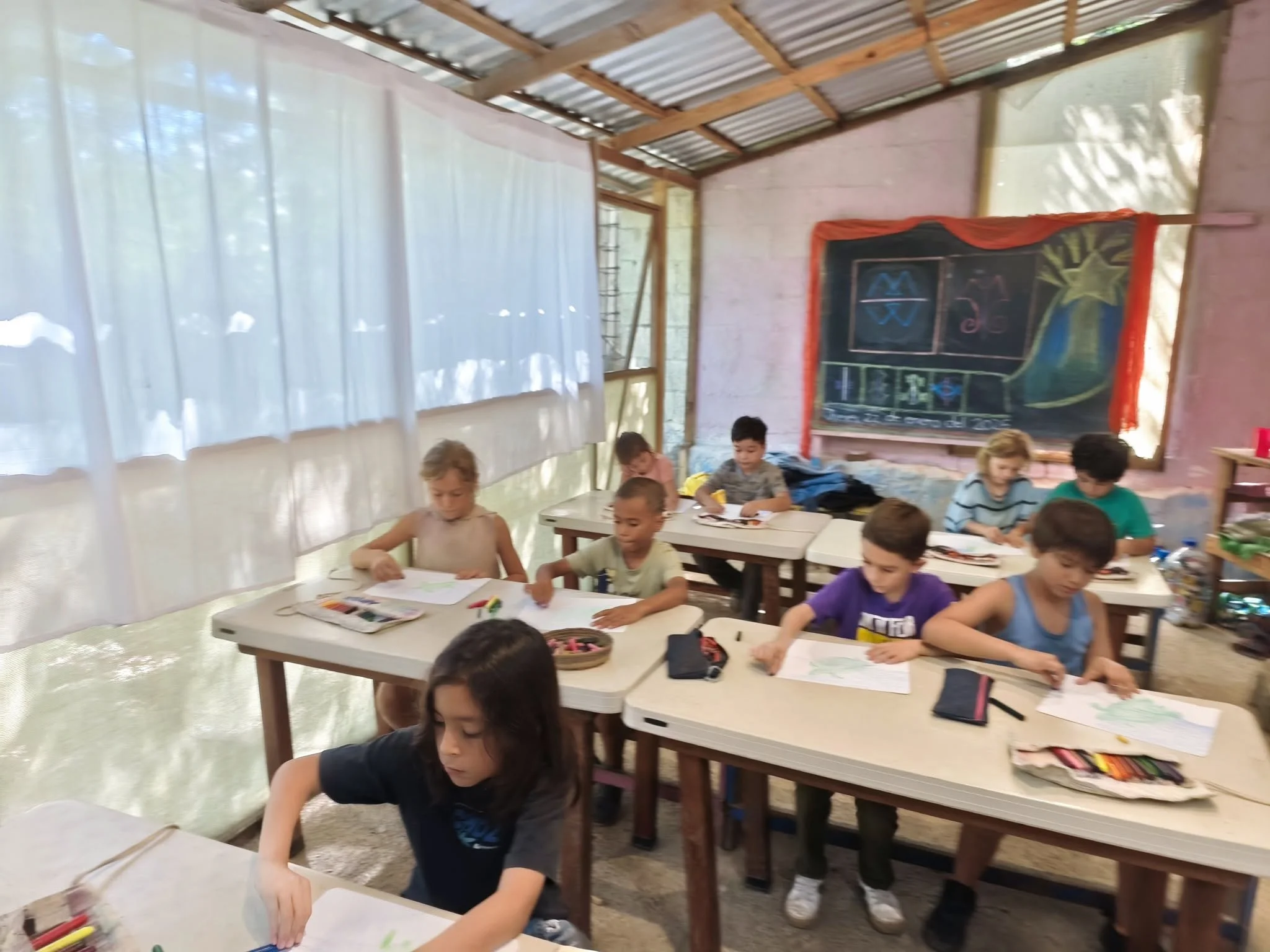
With facilities situated on Avenida 1, Lot 5, Block 428 in Colonia Tumben Kaa and a central campus location, Korali covers Nursery (Nido), Preschool (Casa de Niños), and Elementary levels. Its pedagogical proposal synthesizes Montessori and Reggio Emilia methods, emphasizing self-directed inquiry, individual portfolio documentation, and cooperative project resolution. The bilingual Spanish-English program is complemented by outdoor education, a school garden, and weekly art workshops. It maintains small learning communities of just 10 to 15 students per educational guide.
The payment schedule is spread across 10 monthly payments during the school year (August to June). Annual registration ranges from $12,000 to $18,000 MXN. Meanwhile, monthly tuition rates fluctuate between $8,000 and $9,000 MXN ($450 to $500 USD) for preschool, and between $10,000 and $12,000 MXN ($560 to $670 USD) for elementary school.
Na’at Paal Comunidad Educativa Montessori
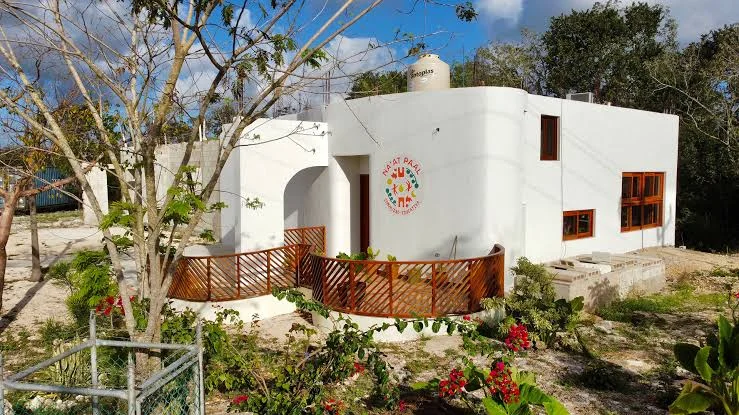
Located in the urban area of Tulum, Na’at Paal applies the classic Montessori method strategically aligned with the official SEP 2022 Curriculum Plan to grant official academic validation for Nursery, Preschool, and Elementary levels. The center operates in bilingual (Spanish-English) environments led by internationally certified Montessori guides, keeping a strict average of 12 to 15 students per classroom.
On the financial side, the annual registration fee ranges from $10,000 to $15,000 MXN. Monthly tuition fees for nursery and preschool range from $7,000 to $8,000 MXN ($390 to $450 USD), while elementary tuition is set between $8,500 and $10,000 MXN ($470 to $560 USD).
Tulum International School (Aldea Zamá / La Veleta)
Designed specifically to meet the needs of international families and long-term digital nomads, this school is located along the corridor between Aldea Zamá and La Veleta, covering Preschool, Elementary, and Middle School. Its pedagogical model focuses on Project-Based Learning (PBL), STEM skill development, and personalized inquiry units. It stands out for employing a higher English language immersion level than the local average, incorporating regular field trips to mangles, coastal reserves, and cenotes as part of its experiential curriculum, with class sizes ranging from 10 to 18 students per classroom.
The required investment includes an annual registration fee of $15,000 to $20,000 MXN. Monthly tuition ranges from $10,000 to $12,000 MXN for preschool, $12,000 to $14,000 MXN for elementary, and $13,000 to $15,000 MXN ($730 to $850 USD) for middle school.
Instituto Vittorio Monteverdi (Tulum Campus)
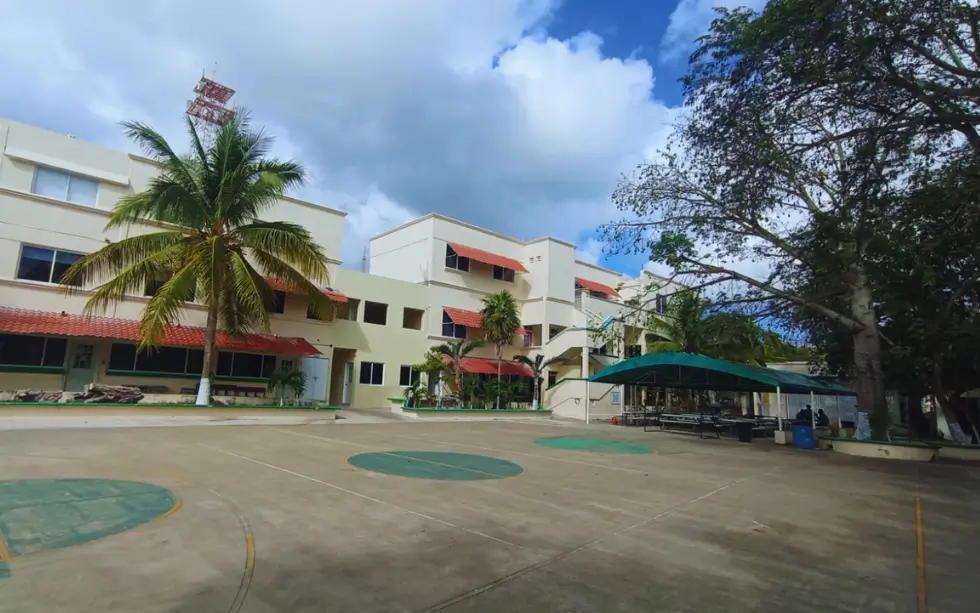
Located in Downtown Tulum right next to City Hall, this institute represents the local extension of an established educational network with official SEP accreditation. It offers coverage for Elementary, Middle School, and High School levels. It delivers a humanist pedagogical model grounded in ethical and Christian values, combining bilingual instruction, pre-university academic preparation, vocational guidance, and sports activities. Facilities feature multidisciplinary science labs, computer rooms, a library, a central courtyard, and worship spaces, accommodating 15 to 20 students per classroom.
It distinguishes itself through a highly accessible cost structure for the local private sector: both annual registration and monthly tuition are set at similar rates of approximately $2,200 MXN for elementary, $2,300 MXN for middle school, and $2,500 MXN for high school, plus an additional expense of $1,700 to $1,800 MXN for learning materials.
Semilla Dorada Waldorf (Tulum-Cobá Highway)
Located at Kilometer 5.2 of the Tulum-Cobá Highway (Rancho Viejo), Semilla Dorada is a self-managed initiative centered on Rudolf Steiner’s anthroposophical principles. It serves children in Preschool (ages 4 to 6) and early Elementary grades (1st, 2nd, and 3rd grade). Its educational model completely avoids screens and technology in early childhood, emphasizing handwork, art, music, and free exploration of nature using organic materials such as beeswax, wool, clay, and natural pigments.
The center provides students with a balanced daily lacto-ovo vegetarian diet prepared with fresh local ingredients. Teaching is conducted in Spanish within hyper-reduced groups of 5 to 15 students. It operates under a free, collaborative education framework without official SEP accreditation, where registration and tuition contributions are determined periodically by the parent-teacher collective.
Other Notable Alternatives (In Najil Xook and EducArte)
Within Tulum’s urban center, two secular institutions with official SEP accreditation stand out:
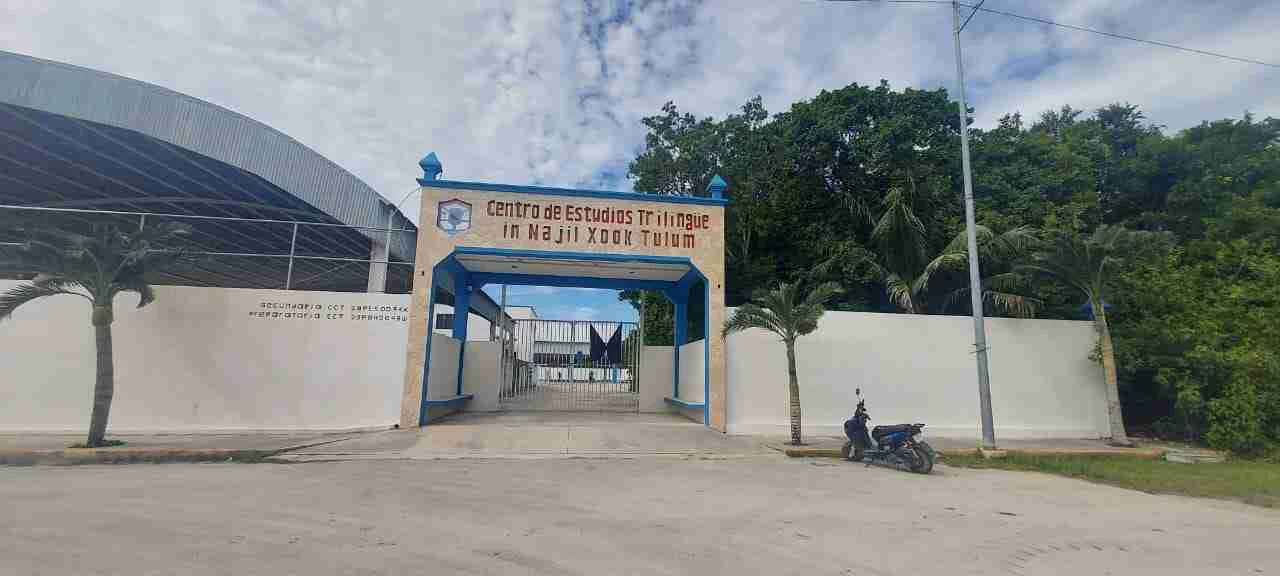
- In Najil Xook Trilingual Study Center: Located in Colonia Centro on the Tulum-Felipe Carrillo Puerto Federal Highway, it covers Preschool, Elementary, Middle School, and High School levels. It sets itself apart with a constructivist trilingual curriculum (Spanish, English, and French), a small overall student body, and a maximum cap of 15 to 20 students per classroom. It offers sports facilities and after-school academies with rates aligned with traditional market averages.
- EducArte Tulum: Located on Calle Interior Sur #4, it provides education from Preschool through High School. Its holistic humanist model promotes the discovery of individual talents, bilingualism, and social-emotional learning, operating with controlled groups of 12 to 18 students while maintaining competitive tuition rates for the local residential market.
Comparative Table: Private Schools in Tulum
| Institution | Main Location | Grades / Levels Offered | Class Capacity | Monthly Tuition (MXN) | Annual Registration (MXN) | Languages & Methodology | SEP Accreditation |
|---|---|---|---|---|---|---|---|
| Colegio Inglés Tulum | Col. Huracanes, Downtown | Nursery, Preschool, Elementary, Middle School | 18-22 students | $5,000 – $8,000 | $8,000 – $12,000 | Bilingual (Spanish-English, French) / Eclectic-Humanist | Yes |
| Colegio Inter de la Riviera Maya | Col. Maya Pax | Nursery, Preschool, Pre-First, Elementary, Middle School | Max. 18 students | $3,575 – $4,870 (11 months) | $5,394 – $5,770 | Bicultural (Spanish-English) / Constructivist, CLIL & UNOi | Yes |
| Korali Comunidad Educativa | Col. Tumben Kaa / Downtown | Nursery, Preschool, Elementary | 10-15 students | $8,000 – $12,000 | $12,000 – $18,000 | Bilingual / Montessori + Reggio Emilia & Sustainability | State Registry |
| Na’at Paal Comunidad Educativa | Tulum Urban Zone | Nursery, Preschool, Elementary | 12-15 students | $7,000 – $10,000 | $10,000 – $15,000 | Bilingual / Classic Montessori aligned with SEP curriculum | Yes (2022 Plan) |
| Tulum International School | Aldea Zamá / La Veleta Corridor | Preschool, Elementary, Middle School | 10-18 students | $10,000 – $15,000 | $15,000 – $20,000 | Bilingual (English dominant) / PBL, STEM & Outdoor | Int. Curriculum / SEP |
| Instituto Vittorio Monteverdi | Downtown (next to City Hall) | Elementary, Middle School, High School | 15-20 students | $2,200 – $2,500 | $2,200 – $2,500 | Bilingual / Humanist with Christian values | Yes |
| Semilla Dorada Waldorf | Tulum-Cobá Hwy Km 5.2 | Preschool, Early Elementary (1st to 3rd) | 5-15 students | Community contribution | Community contribution | Spanish / Waldorf Anthroposophy & Connection with nature | No |
| In Najil Xook | Fed. Hwy Tulum-FCP, Downtown | Preschool, Elementary, Middle School, High School | 15-20 students | Institutional rate | Institutional rate | Trilingual (Spanish, English, French) / Constructivist | Yes |
| EducArte Tulum | Tulum Subd., Calle Interior Sur | Preschool, Elementary, Middle School, High School | 12-18 students | Competitive rate | Competitive rate | Bilingual / Holistic & Humanist approach | Yes |
Educational Challenges: The High School Shortage and the Green School Phenomenon
The Shortage of Private High Schools in Tulum
One of the greatest challenges facing the private education system in the municipality is the limited offering of high schools (preparatorias). The vast majority of bilingual and international centers end their academic programs at the middle school level. Except for options within the urban center such as Instituto Vittorio Monteverdi, In Najil Xook, and EducArte, formal upper secondary options remain very limited.
This lack of continuity forces many families with teenagers to make major logistical decisions: daily commutes or relocation to Playa del Carmen (65 km north) to access international high schools (such as CIARM, Britt Academy, Colegio Inglés Campus Playa, or Instituto Tepeyac), enrollment in accredited online high school platforms abroad (such as IVLA or Mati Homeschool), or turning to the local public system through CECYTE or COBAQ.
Impact of Green School Tulum in Selva Zamá
The arrival of the international Green School Tulum project within the Selva Zamá residential development marks a turning point for the region. Inspired by the successful Bali model, this campus is designed around principles of bio-architecture, experiential sustainability, and environmental leadership training from elementary through high school.
This megaproject has generated a strong real estate dynamic in the area, driving up capital appreciation for neighboring developments and attracting high-net-worth families and international investors seeking to establish permanent residence in Tulum, drawn by a world-class educational offering.
Homeschooling and Learning Pods in La Veleta and Aldea Zamá
In parallel with traditional education, neighborhoods with a high concentration of digital nomads and independent professionals—such as La Veleta and Aldea Zamá—have developed a solid ecosystem of homeschooling and learning pods. These communities combine accredited virtual curricula (Oak Meadow, Khan Academy, AMA Homeschooling) with art workshops, water sports, youth surfing, and field exploration activities in local cenotes and nature reserves. This modality requires an estimated monthly investment of $2,000 to $8,000 MXN for platform access and learning materials, alongside direct parental involvement.
School Budget in Tulum: Additional Expenses to Consider
When calculating the real cost of attending a private school in Tulum, it is essential to factor in additional and incidental fees that form part of the annual budget:
- Billing Schedules: Some institutions spread their fees across an 11-month payment plan per year (such as Colegio Inter), while international-profile schools typically require 10 monthly payments during the school year from August to June.
- Annual Registration or Re-enrollment: A mandatory fee ranging from $5,394 MXN at more accessible institutions up to $20,000 MXN at international-focused bilingual schools.
- Materials, Books, and Digital Platforms: Curriculum packages, comprehensive educational systems (UNOi, CLIL), and technology licenses represent a recurring annual expense ranging between $1,750 and $5,500 MXN.
- School Uniforms and Transportation Logistics: Official uniform packages average between $1,200 and $2,000 MXN. Meanwhile, school bus services—subject to route availability—add an estimated monthly fee of $1,500 to $3,000 MXN.
How to Choose the Right School for Your Children in Tulum (Selection Criteria)
To select the best alternative among private schools in tulum, we recommend weighing your family’s priorities based on the following criteria:
- Official Recognition (SEP Accreditation): If you plan to keep your children within the official Mexican education system or need seamless grade certification without extra paperwork, prioritize options with formal RVOE accreditation (such as Colegio Inglés, Colegio Inter, Na’at Paal, Monteverdi, In Najil Xook, or EducArte).
- Language Profile and International Outlook: For expatriate or nomad families requiring advanced English proficiency or trilingual programs for credit transfer back in their home countries, options like Tulum International School, Korali, or In Najil Xook are ideal.
- Educational Methodology and Philosophy: Determine whether your children thrive better in structured environments utilizing modern technology and traditional assessments (constructivism/humanism) or in experiential, nature-based pedagogies (Montessori, Reggio Emilia, or Waldorf).
Conclusion and Recommendations
The private education market in Tulum continues to mature rapidly. Today, families can choose from a diverse range of options, extending from traditional bilingual schools with strong academic programs to innovative alternatives centered on sustainability and holistic development.
Carefully evaluating location, tuition costs, language immersion levels, and official accreditation will allow you to make the best decision to ensure your children’s well-being and academic growth in the Riviera Maya.
Join The Discussion