


 by
by 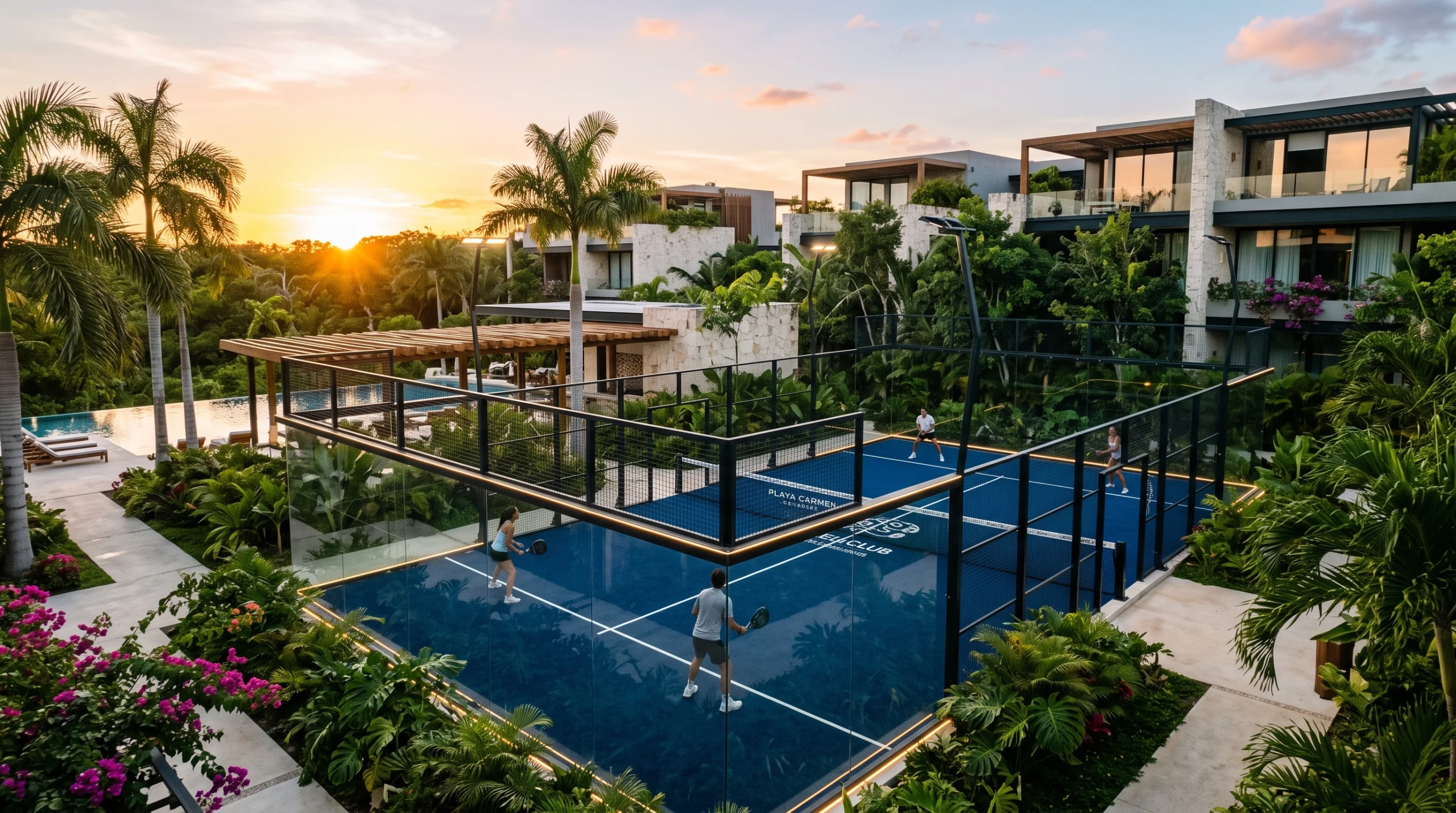
Playa del Carmen is undergoing an unprecedented phase of urban and demographic maturation in the Mexican Caribbean. The coastal town that once drew global attention primarily for its white-sand beaches and vibrant nightlife has evolved into a cosmopolitan hub for permanent living and retirement among domestic, Canadian, American, and European investors. Within this dynamic evolution, wellness habits and physical activity have transitioned from casual weekend recreation into the core structural pillar of community life and real estate value. In this setting, racquet sports—spearheaded by padel and tennis—lead the demand among residents and tenants alike.
For real estate investors, this paradigm shift represents a clear quantitative opportunity. The proliferation of condominium projects offering generic amenities—such as standard swimming pools or conventional sundecks—has created a homogeneous supply across rental platforms. Integrating regulation racquet sports infrastructure into the master plan of a gated residential community is not an aesthetic luxury: it is a direct catalyst for differentiation that elevates the average daily rate (ADR), sustains high occupancy rates throughout the low season, and secures a superior rate of capital appreciation compared to traditional developments across the Riviera Maya.
Table of Contents
The Rise of Padel: A Global Phenomenon with Mexican Roots
Although the massive popularization of padel is often associated with its widespread adoption in countries such as Spain, Argentina, or Sweden, the discipline was actually created in Mexico. In 1969, Mexican businessman Enrique Corcuera adapted the dimensions of a fronton court at his private estate in Las Brisas, Acapulco, incorporating three-meter-high perimeter masonry walls and a center net to keep the ball from straying into neighboring plots. That domestic spatial innovation gave birth to the fastest-growing sporting discipline of the 21st century, which today boasts more than 35 million active players across more than 150 nations.
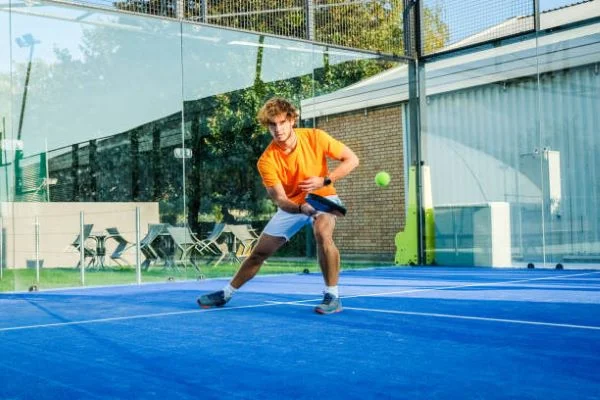
In Playa del Carmen’s real estate and tourism market, padel has consolidated itself ahead of other sports due to decisive structural factors:
- Dynamism and social cohesion: Because it is played almost invariably in doubles (two against two), padel acts as a natural social connector, enabling foreign residents, digital nomads, and local property owners to build professional networks and community integration immediately.
- Accessible learning curve: Unlike traditional technical tennis, which requires months of structured coaching to sustain a steady rally, any novice player can enjoy engaging and dynamic points starting from their very first session on the court.
- Low joint impact: The synthetic turf surface combined with silica sand infill cushions the impact on knees and ankles, allowing individuals of diverse age groups—from teenagers to senior retirees—to practice the sport on a regular basis.
- Extended rallies and high caloric burn: The rebound off the tempered glass walls keeps the ball alive longer, fostering prolonged exchanges and an intense cardiovascular workout without demanding exhausting baseline sprints.
Where to Play Padel in Playa del Carmen: Directory of Clubs and Facilities
The supply of padel courts in Playa del Carmen has become highly professionalized through international-standard private venues, certified academies, and centralized mobile platforms like Playtomic for court bookings and the organization of open matches.
Heat Padel & Pickleball Club
Located along Avenida 68 Norte and the Federal Highway, in the Bosque Real neighborhood, this is one of the most comprehensive private sports complexes in Quintana Roo. The club features five professional padel courts with 12-millimeter tempered glass, four climate-controlled indoor courts dedicated to pickleball—a sport with surging demand among North American visitors—golf simulators, premium locker rooms, and an on-site sports cafe. In addition, it serves as the official headquarters for technical training programs affiliated with the academy of professional player Paquito Navarro. The approximate rental fee for a 90-minute court session ranges between 700 and 950 Mexican pesos, bookable directly via Playtomic.
All4Padel Club Playa del Carmen
Strategically situated at the intersection of Avenida Paseo del Mayab and Avenida Universidades, within the city’s northwest quadrant experiencing the fastest residential expansion. Operating with the official technical backing of Adidas Padel, the club offers panoramic regulation courts, anti-glare LED lighting for night play, paddle and ball rental services, a sports pro shop, and a continuous calendar of clinics and weekend tournaments. It serves as the primary epicenter of play for residents of the new gated residential communities in the western corridor. Its average rate per 90-minute session sits between 650 and 850 Mexican pesos.
Elite Padel
Set in Colonia Ejidal (Calle 25 Sur), this is one of the favorite local clubs among permanent residents and working professionals in the city. It is characterized by an approachable sporting atmosphere, continuous internal leagues across multiple skill categories (first through fifth tier), and rigorous preventive maintenance across its synthetic turf and metal perimeter mesh. The reservation price per session runs from 600 to 750 Mexican pesos, with options to schedule private lessons with instructors certified by the Mexican Padel Federation (FEMEPA).
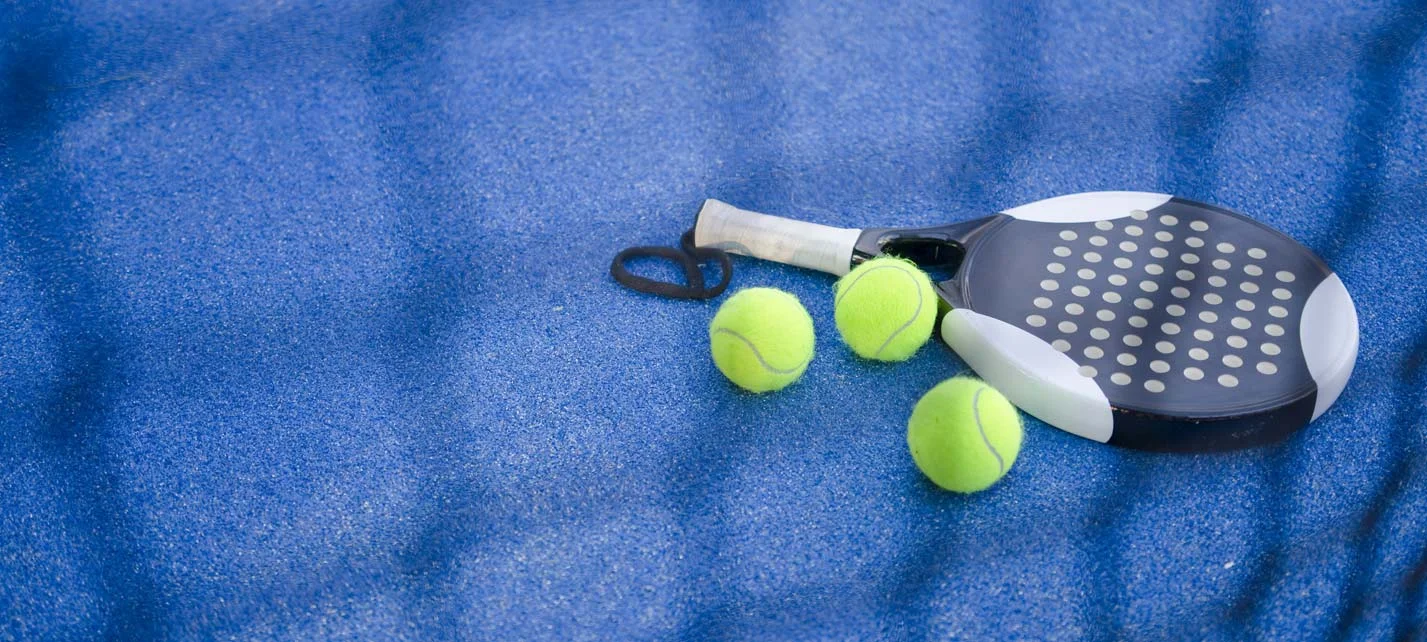
How and Where to Play Tennis in Playa del Carmen
Despite the swift rise of padel, traditional tennis maintains an established community of high purchasing power throughout the Riviera Maya. The game takes place primarily across downtown civic venues and private clubs tucked inside gated residential enclaves.
Public Courts: Polideportivo Mario Villanueva
Located on Calle 34 Norte and Avenida 10, just two blocks from Fifth Avenue. This municipal sports complex features two regulation hard-surface tennis courts, enclosed by perimeter fencing and equipped with lighting towers for evening play. To play, visitors must visit the sports complex administrative office and pay an affordable municipal court fee (approximately 80 to 150 Mexican pesos per hour). Due to its central location, it is critical to reserve court times 24 to 48 hours in advance, particularly during morning time blocks from 7:00 to 9:30 AM and evening blocks from 6:30 to 9:30 PM.
Resort-Grade Courts: Ocean Riviera Paradise
Located north of the urban core within the Ocean Riviera Paradise hotel development. It features three synthetic-turf tennis courts equipped with professional illumination, offering a surface that is gentler on the joints compared to rigid concrete. Local tennis enthusiasts and external visitors can access these courts through athletic agreements, private coaching, or day-pass packages, subject to prior reservation with the resort’s concierge or activities department.
Private Clubs in Playacar and Mayakoba
For players seeking complete privacy, Mayakoba Sports Club and the private facilities inside Playacar Phase 2 offer regulation hard and composite courts immersed in dense tropical jungle surroundings. Court access is reserved for lot and villa owners, verified club members, and guests staying in on-site vacation rentals. These facilities feature professional tennis pros who deliver private, customized clinics for both adults and juniors.
Practical Tips for Playing Tennis in the Caribbean Climate
- Schedule management: Relative humidity and solar radiation in Quintana Roo reach their peak between 11:00 AM and 4:00 PM. Regular tennis players schedule their matches exclusively at dawn (6:30 to 9:00 AM) or after sunset (past 6:00 PM) to avoid heat exhaustion.
- Ball pressure and string tension: Coastal ambient salinity and air density accelerate pressure loss in standard tennis balls. It is recommended to open brand-new pressurized ball cans prior to official matches and opt for co-polyester strings strung at moderate tensions to better withstand humidity.
- Hydration and specialized footwear: Profuse sweating in tropical climates requires continuous electrolyte and coconut water intake. As for footwear, it is essential to use hard-court-specific outsoles engineered with heat-resistant rubber compounds to avoid slipping and premature sole wear.
The Impact of Racquet Sports Courts on Real Estate Return on Investment
From the perspective of financial modeling and real estate asset underwriting, the decision to incorporate tennis or padel courts within a master-planned residential community produces measurable returns across ROI, operating expenses (OPEX), and asset liquidity.
Spatial Efficiency and Profitability per Square Meter
One of the greatest challenges for real estate developers in Playa del Carmen is maximizing salable density without compromising green open spaces and amenity ratios. In this balance, padel offers a decisive geometric advantage over conventional tennis:
- Compact physical footprint: A regulation padel court occupies just 200 square meters (20 meters in length by 10 meters in width), accommodating four active players simultaneously at all times.
- Comparison against tennis: A standard tennis court demands between 650 and 700 square meters when factoring in regulatory baseline and side runoffs, typically serving only two to four players.
- Higher recreational density: Within the footprint required for a single tennis court, a residential development can construct three complete padel courts, allowing twelve people to play simultaneously on the exact same surface area.
Additionally, the operating maintenance cost of sand-dressed synthetic turf for padel is significantly lower than maintaining hard tennis courts, which frequently suffer cracking, blistering, and color fading due to thermal expansion caused by the intense Caribbean sun and seasonal tropical downpours.
Vacation Rental Metrics: ADR and Sustained Occupancy
Across vacation rental channels such as Airbnb, VRBO, and Booking.com, search algorithms and traveler filters favor condominiums that feature active, resort-style amenities. According to hospitality performance metrics in the Riviera Maya, apartments located within gated complexes with padel or tennis courts record distinct advantages:
- Higher Average Daily Rate (ADR): Units inside gated communities with racquet sports amenities command nightly rate premiums between 15% and 25% over comparable condominiums that only provide a shared swimming pool.
- Guest loyalty for medium and long-term stays: Digital nomads and independent professionals from the United States, Canada, and Europe seek out residences where they can balance remote work routines with daily sports, booking extended stays ranging from one to six consecutive months.
- Mitigating seasonal tourism dips: The capability to host clinics, local leagues, and training retreats allows owners to preserve healthy occupancy rates between 65% and 75% during traditional low and shoulder months (May, June, September, and October).
Longevity and Wellness: Medical Evidence Supporting Racquet Sports
The global asset class of *Wellness Real Estate* (properties engineered to foster health, vitality, and longevity) has become one of the fastest-growing segments in the international market. Contemporary buyers are no longer seeking to purchase just concrete walls; they demand residential ecosystems that actively add functional, healthy years to their lives.
International clinical literature has systematically documented the biological superiority of racquet sports compared to other physical activities:
The landmark epidemiological *Copenhagen City Heart Study*, a 25-year longitudinal study tracking a sample of 8,577 individuals published in the prestigious journal *Mayo Clinic Proceedings*, revealed conclusive findings regarding human longevity. The data showed that individuals who played tennis regularly increased their life expectancy by an average of 9.7 additional years compared to sedentary cohorts. By contrast, popular solo activities showed lower life-extension gains: cycling added 3.7 years, swimming 3.4 years, and distance running 3.2 years.
Furthermore, a large-scale cohort study published in the *British Journal of Sports Medicine*, based on the clinical monitoring of more than 80,000 adults, concluded that regular participation in racquet sports is associated with a 56% reduction in cardiovascular disease mortality risk and a 47% reduction in all-cause mortality. This physiological advantage stems from the simultaneous fusion of three critical factors: high-intensity interval training (HIIT), continuous requirements for visual-motor coordination and rapid spatial decision-making, and deep social interaction that alleviates chronic stress and depressive states.
Residential Communities with Racquet Sports Courts in the Riviera Maya
For investors seeking to deploy capital into residential developments in Playa del Carmen that combine gated perimeter security, sustained capital appreciation, and professional sporting amenities, the market provides distinct alternatives:
- Playacar Phase 2: The most exclusive, consolidated gated golf community in Playa del Carmen. Offering 24/7 controlled access, an 18-hole championship golf course designed by Robert von Hagge, private tennis facilities, and tree-lined walkways, its inventory focuses on luxury resale villas and condominiums with strong historical appreciation and stable dollar-denominated rental yields.
- Corasol and El Cielo: Low-density gated communities located along Playa del Carmen’s northern corridor, just minutes from the coastline. They host avant-garde architectural residences, 24-hour private security, and residential clubhouses featuring padel courts, functional fitness gyms, and private beach clubs.
- Mayakoba Country Club: A master-planned residential and country club development anchored by an ecological master plan that integrates sprawling conservation areas, bicycle paths, and an integrated sports club complete with professional tennis and padel facilities for residents.
- Resort-Style Pre-Constructions along Universidades and Arco Vial: Mid-rise condominium developments in early pre-construction stages positioned along primary urban growth axes. These projects integrate padel courts, semi-Olympic lap pools, co-working lounges, and calisthenics parks. They allow investors to enter at preferential first-tier list prices, leverage developer-direct 24-to-36-month interest-free financing terms, and capture significant capital appreciation upon project delivery.
Frequently Asked Questions About Padel, Tennis, and Real Estate in Playa del Carmen
How much does it cost to rent a padel court in Playa del Carmen?
The rental rate for a regulation padel court ranges between 600 and 950 Mexican pesos per 90-minute session (roughly 35 to 55 USD). Pricing varies depending on the club, whether the courts are outdoor or indoor/climate-controlled, and the chosen time slot, with evening floodlit sessions experiencing the highest demand.
How do you book racquet sports courts across the city?
The vast majority of private padel and pickleball clubs in Playa del Carmen (such as Heat Padel, All4Padel, and Elite Padel) manage their booking calendars and payment processing through the Playtomic mobile app, which also allows solo players to find open matches hosted by other local players. For public tennis at Polideportivo Mario Villanueva, reservations must be made in person at the facility’s administrative offices.
Why do padel courts generate higher real estate returns than tennis courts?
A padel court requires just 200 square meters of footprint compared to the 650+ square meters demanded by a traditional tennis court. This enables developers to optimize salable square footage, lower recurrent maintenance overhead, and offer a community-centric amenity that increases nightly vacation rental rates by 15% to 25%.
What profile of tenants do residential communities with racquet amenities attract?
They primarily attract upper-middle-class digital nomads, families enjoying medium-length vacations, and seasonal retirees (snowbirds) from the United States and Canada. This guest demographic is committed to maintaining an active, health-conscious lifestyle, preserves property amenities carefully, and is willing to pay premium rental rates to avoid having to travel outside their development to train.
When is the best time of day to play outdoors in Playa del Carmen?
Given the tropical Caribbean climate, the optimal outdoor hours to play tennis and padel are from 6:30 to 9:00 AM in the morning and from 6:00 PM onward in the evening and night, when solar radiation drops and temperatures become comfortable for high-intensity cardiovascular activity.
What did you think of this information?
We would love to hear your thoughts. If you have any comments, doubts, or questions, feel free to leave them in the comments section below. We are here to guide and advise you.
If you found this article helpful, feel free to share it across your favorite social networks or send it via email or WhatsApp to your family and friends! Thank you very much for your support, and remember, we are Plalla Real Estate. 🙂
Join The Discussion